


Beginner's Guide to Following a Major News Story Without Burnout

A major story rarely arrives all at once. It lands in fragments: an alert at 7:40 in the morning, a press conference at noon, three competing explanations by dinner. Then it keeps going. For days, sometimes months, the coverage continues — new details, revised details, official statements, and a great deal of repetition between them. Following something that matters to you over that stretch is a skill, and it has less to do with stamina than with rhythm.
What follows is a working method for staying informed across a prolonged story without letting it take over your week.
The real cost of checking constantly
Breaking coverage is built on publishing cycles, not on your needs. A newsroom pushing updates every few minutes is doing its job, but the pace of that output is set by deadlines elsewhere. When you sync your attention to it, you inherit a sense of emergency that rarely matches what actually changed since you last looked.
Two things make this tiring. The first is duplication: the same confirmed facts, restated with a slightly different headline, dozens of times a day. The second is emotional load. Even when nothing new has happened, the tone of the coverage stays at a pitch, and reading it repeatedly produces the weariness of having lived through a crisis several times before lunch. Neither cost buys you much understanding.
Start with a summary, not a stream
Before you open a feed, read a summary. A wire service's daily wrap, a broadcaster's morning briefing, or a newspaper's live-blog "what you need to know" box at the top will usually give you 90 percent of the confirmed information in two minutes. Only then decide whether the story deserves more of your time today.
As you read, hold three questions in mind:
- What is confirmed? Named sources, official documents, on-the-record statements.
- What changed since I last checked? If the answer is "nothing much", close the tab.
- What is still genuinely unknown? Naming the gaps stops speculation from filling them.
A small habit that pays off: keep a dated note, five lines at most, summarising where the story stands. When the coverage becomes a blur of contradictory headlines, your own notes will tell you which claims were later dropped and which have held up for a week.
Put the coverage on a schedule
Two or three check-ins a day is plenty for almost any story that does not involve your immediate safety. Pick times you will actually keep — after breakfast, at lunch, before you stop work — and treat them as the whole of your news reading rather than the first instalment of it.
Twenty focused minutes beat forty scattered two-minute glances, partly because you read further than the headline and partly because you finish. Some practical adjustments:
- Turn off push alerts for everything except the categories you would genuinely want to be woken by. Keep one source's alerts, not five.
- Move the apps you check reflexively off your home screen, or sign out on your phone and stay signed in on a laptop.
- Use a read-later tool for anything long, and clear it weekly — much of it will be obsolete by then.
- Keep alerts on if the story is local and affects your movement, your home or your family. Convenience is worth less than a timely warning.
If a story is developing fast and you have a quiet evening, resist the urge to catch up on everything you missed. Read the latest summary and let the rest go.
Choose a few sources and know each one's job
You do not need fifteen outlets. You need three or four with distinct roles, so you are not reading the same wire copy under different logos.
Assign roles
Let one fast, factual source tell you what happened. Let one slower, more analytical outlet explain why it matters and hold people accountable. Let a local or specialist source carry the ground-level detail the big outlets will not have. And when a document is central to the story — a court filing, a budget, a transcript — go and read it, or at least the key passages quoted at length.
Watch for the correction gap
Early claims are often revised, and the revision rarely travels as far as the original. When a detail you repeated turns out to be wrong, note it. This is not about mistrusting everything; it is about treating a first-day report as a first draft rather than a verdict.
Set your information boundaries
Being informed does not require consuming everything. Decide in advance how much detail you need, and be specific about it. Graphic footage, speculation about victims and their families, and unverified material circulating on social platforms rarely add to your understanding. Skipping them is a choice you are allowed to make.
Boundaries also apply socially. You may be asked for an opinion at work or in a group chat before you have formed one. "I'm following it, but I don't have a view yet" is a complete answer. If children in your household are hearing about a frightening story, a short, calm explanation pitched at their age does more good than silence or a screen left running in the corner.
And if the story touches something personal — a loss, a diagnosis, a legal matter in your own family — the general reporting will not answer your specific question. Ask a qualified professional rather than assembling an answer from coverage and comment threads.
Notice when it starts costing you something
The warning signs are mundane. Checking in bed before you are properly awake. Rereading the same three articles. Feeling worse after checking than before, and checking again anyway. Snapping at people about something that happened in a place you have never visited.
A useful test: did checking change what you are going to do next? If the answer is consistently no, what you are doing is not staying informed — it is a habit looking for a reason. Take forty-eight hours away from that story. Ask someone to tell you if something genuinely significant happens. You will come back with a clearer head and lose almost nothing.
A routine you can start tomorrow
Read one summary with your first coffee. Note in a sentence what changed. Check again at lunch for five minutes and once in the evening, and leave it there. Keep alerts for one source only. Know which outlet does which job, and skip the rest. Decide what you will not read, and stick to it. If you feel the pull to refresh, wait ten minutes and see whether the urge passes — it usually does.
Stories that last for weeks are marathons of attention, and the people who follow them well are rarely the ones reading most. They are the ones who read deliberately, at times they chose, and who know when to put the phone face down.
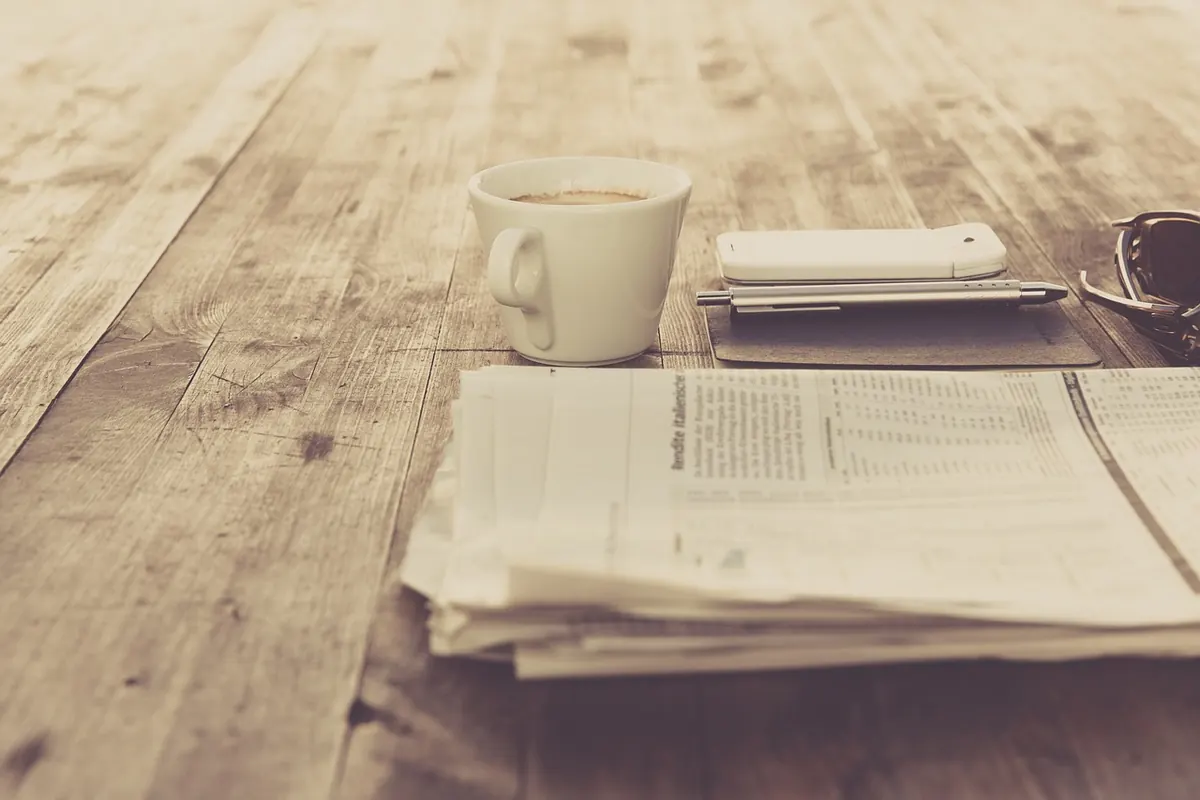
Photo: congerdesign / Pixabay